

If you’ve been scrolling TikTok or chatting with friends lately, chances are you’ve run into the letters “POV” more than once. It shows up in captions, comments, texts, and memes — but what does it actually mean, and why has it taken over the internet? This guide breaks it down in plain, simple language so you never have to guess again.
POV – Quick Meaning
Simple Definition:
POV stands for Point of View. It refers to how someone sees, experiences, or feels about a situation. In texting and social media, it’s used to put the reader or viewer directly into a specific scene or mindset — almost like saying “imagine you’re the one living this moment.”
Quick Examples:
- POV: You just woke up late for your exam.
- POV: Your crush finally texts back.
- POV: You’re the only one who remembers the group project deadline.
Each of these examples places the reader inside the situation, making it feel personal and relatable instantly.
Origin & Background
Traditional Meaning
Long before it became a texting trend, POV was a filmmaking and literature term. In movies, a “POV shot” shows the audience exactly what a character sees, creating a sense of immersion. In books, point of view determines who is narrating the story — first-person, second-person, or third-person.
How It Became Internet Slang
As short-form video apps like TikTok and Instagram Reels grew popular, creators started using “POV” as a storytelling hook. Instead of just describing a scene, they invited viewers to imagine themselves living it. This creative twist turned a filmmaking term into one of the biggest pieces of internet slang of the decade.
Real-Life Conversations
1) WhatsApp Chat
Friend: POV: I just found out the exam got postponed 😭
You: Wait, seriously?? Best news all week
2) Instagram DMs
Sender: POV: you open Insta and see your ex liked your story 👀
Reply: LOL, why is this so accurate
3) TikTok Comments
Comment: POV: this is literally my life every Monday morning
4) Text Message
Text: POV: I said I’d sleep early and it’s 2 am again
5) Funny Friend Chat
Friend 1: POV: you’re trying to act calm, but you’re internally panicking
Friend 2: Stop, this is ME right now 💀
POV Meaning in Text Urban Dictionary
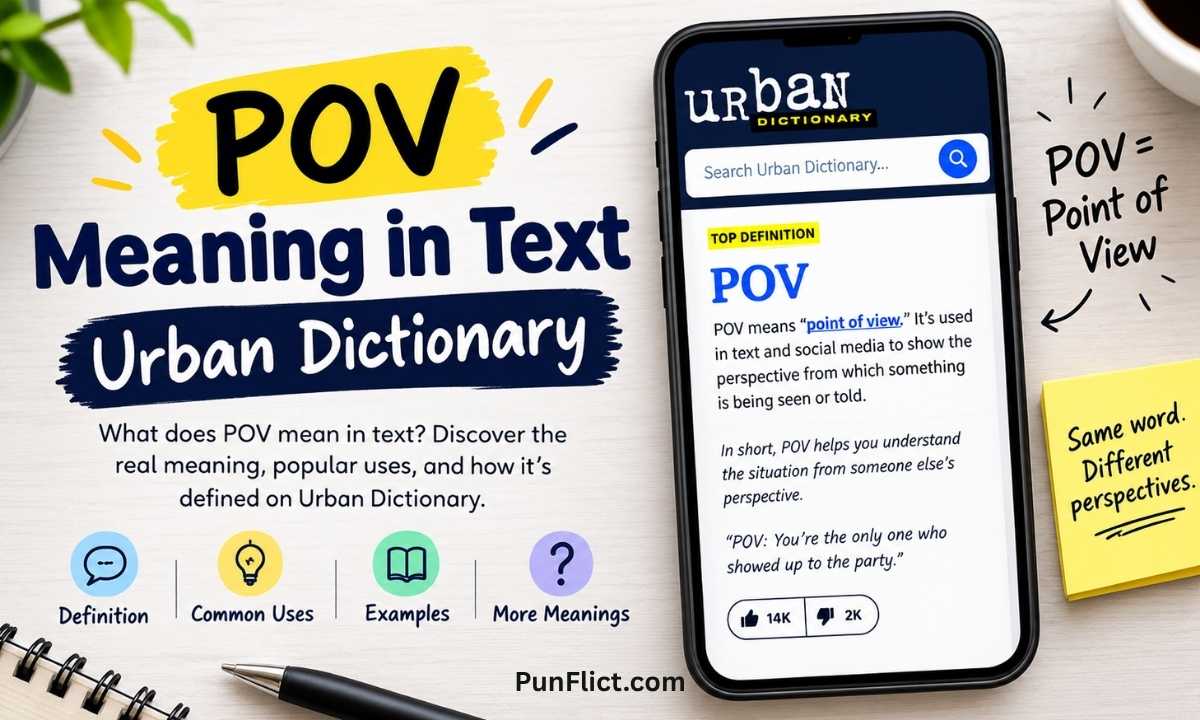
Slang dictionaries generally describe POV as a way of expressing someone’s personal perspective or experience, often used to set up a relatable or humorous scenario. Most definitions agree on the same core idea: POV puts the audience directly into a moment, rather than just describing it from the outside.
What Does POV Mean in Text Slang?
In everyday texting, POV usually means one of two things:
- “In my opinion” — used casually before sharing a personal take
- A scenario setup — used before describing a relatable situation, similar to how it’s used on social media
Context makes the meaning obvious. If POV is followed by a colon and a mini scene, it’s setting up an experience. If it’s inside a regular sentence, it usually means “from my perspective.”
POV Meaning in Meme

In meme culture, POV captions are used to create instant relatability. A meme captioned “POV: it’s Sunday night, and you haven’t started your assignment” works because it puts the viewer directly into a familiar, often funny, situation. The humor comes from how accurately it captures a shared experience.
Emotional & Psychological Meaning
1) It Makes People Feel Seen
POV content often mirrors real feelings and everyday struggles, which is why people relate to it so strongly.
2) It Creates Instant Connection
By placing the reader inside the scenario, POV content builds a quick emotional bond between creator and audience.
3) It Reflects Modern Identity
Younger generations often express personality, humor, and mood through POV-style posts instead of long explanations.
4) It Feels Personal Without Being Too Deep
POV lets people share emotions in a light, casual way — without sounding overly serious or dramatic.
Usage in Different Contexts
1) Social Media
How it works:
Creators use POV captions to frame short videos, images, or text posts around a specific, relatable scenario.
Example:
POV: You finally finish a project you’ve been avoiding for weeks.
Purpose:
It boosts engagement because viewers instantly relate and often comment their own version of the experience.
2) Friends & Relationships
Example:
“POV: you’re waiting for a reply, and it’s been on ‘seen’ for an hour.”
Example:
“POV: your best friend already knows what you’re going to say before you say it.”
3) Work or Professional Settings
Appropriate professional uses:
- Sharing a perspective in a meeting summary
- Framing a case study from the customer’s point of view
- Explaining a decision-making process
Example:
“From my POV, the campaign performed well because of stronger targeting.”
Important:
Keep it professional — avoid meme-style POV captions in formal emails or reports.
4) Casual vs Serious Tone
Casual POV
Used for jokes, relatable moments, and everyday scenarios among friends.
Serious POV
Used to explain a genuine opinion, especially in discussions, debates, or written analysis.
Common Misunderstandings
1) Using POV for Something That Isn’t a Perspective
Some people misuse POV to describe a random statement instead of an actual viewpoint or scenario, which confuses the meaning.
2) Confusing POV With Opinion
Example:
Saying “POV: pizza is the best food” is closer to an opinion than a true perspective-based scenario, though casual usage often blends the two.
3) Using It in Very Serious Situations Without Sensitivity
Avoid using it when:
- Discussing grief, tragedy, or sensitive personal experiences
- The topic involves someone else’s private struggles
- The tone could come across as mocking a serious issue
Comparison Table
| Context | Meaning of POV | Example |
| Texting | Opinion or perspective | “POV, we should leave early” |
| Social Media | Scenario the viewer imagines living | “POV: it’s finals week” |
| Film/Literature | Narrative or camera perspective | First-person POV shot |
| Memes | Relatable, often humorous scene | “POV: Monday mornings” |
| Professional Use | A stated viewpoint or analysis | “From my POV, sales improved” |
Key Insight:
The core meaning stays the same — perspective — but how it’s applied changes with the platform and tone.
Variations / Types of POV
1) Funny POV
Light, humorous scenarios meant to make people laugh or relate instantly.
2) Romantic POV
Used to describe sweet or emotional moments between couples.
3) Sad POV
Reflects heartbreak, loneliness, or emotional lows in a relatable way.
4) Confidence POV
Highlights self-assurance, glow-up moments, or personal wins.
5) Friendship POV
Captures inside jokes or shared experiences between close friends.
6) Family POV
Shows relatable family dynamics, especially common in South Asian households.
7) Student POV
Focuses on exam stress, deadlines, and classroom humor.
8) Work POV
Highlights office life, deadlines, or workplace humor.
9) Fashion or Beauty POV
Used to showcase outfits, transformations, or beauty routines from a personal angle.
10) Cinematic POV
Mimics a movie-style perspective shot, often used for aesthetic or dramatic content.
How to Respond When Someone Uses It
Casual Replies
“Omg this is literally me”
Funny Replies
“Why did you have to call me out like that”
Mature / Confident Replies
“Honestly, accurate. No notes.”
Private or Respectful Replies
If the POV touches something personal, a simple “I get that; that sounds tough” keeps the reply thoughtful rather than joking.
Regional & Cultural Usage
1) Western Culture
Common style:
Heavy use in memes, humor, and everyday texting among younger audiences.
2) Asian Culture
Common style:
Frequently blended with K-pop, anime, and drama fan communities to express relatable fan moments.
3) Middle Eastern Culture
Common style:
Often used in family-related humor and social commentary shared across messaging apps.
4) Global Internet Usage
Across cultures, POV has become a shared digital language — even when the examples differ, the underlying idea of “seeing through someone else’s eyes” stays universal.
Frequently Asked Questions
What does POV mean in a text?
It usually means “point of view” or “in my opinion,” depending on context.
What does POV mean on TikTok?
It signals a scenario the viewer is meant to imagine experiencing firsthand.
Is POV always used casually?
No, it can also be used in professional or analytical writing to state a viewpoint.
Can POV be used seriously?
Yes, especially when discussing genuine opinions or sensitive topics respectfully.
Where did POV originally come from?
It originated as a filmmaking and literary term describing narrative or camera perspective.
Conclusion
POV has grown from a simple filmmaking term into one of the most versatile pieces of internet language today. Whether it’s used to share a laugh, express an opinion, or pull someone into a relatable moment, its core meaning stays the same: seeing the world through someone else’s eyes. Once you understand the context, using POV naturally in chats, captions, and conversations becomes second nature.

I’m John Marvel, a pun lover and writer with 4 years of experience in creating clever wordplay. I enjoy turning simple words into fun and creative puns that make people smile.